
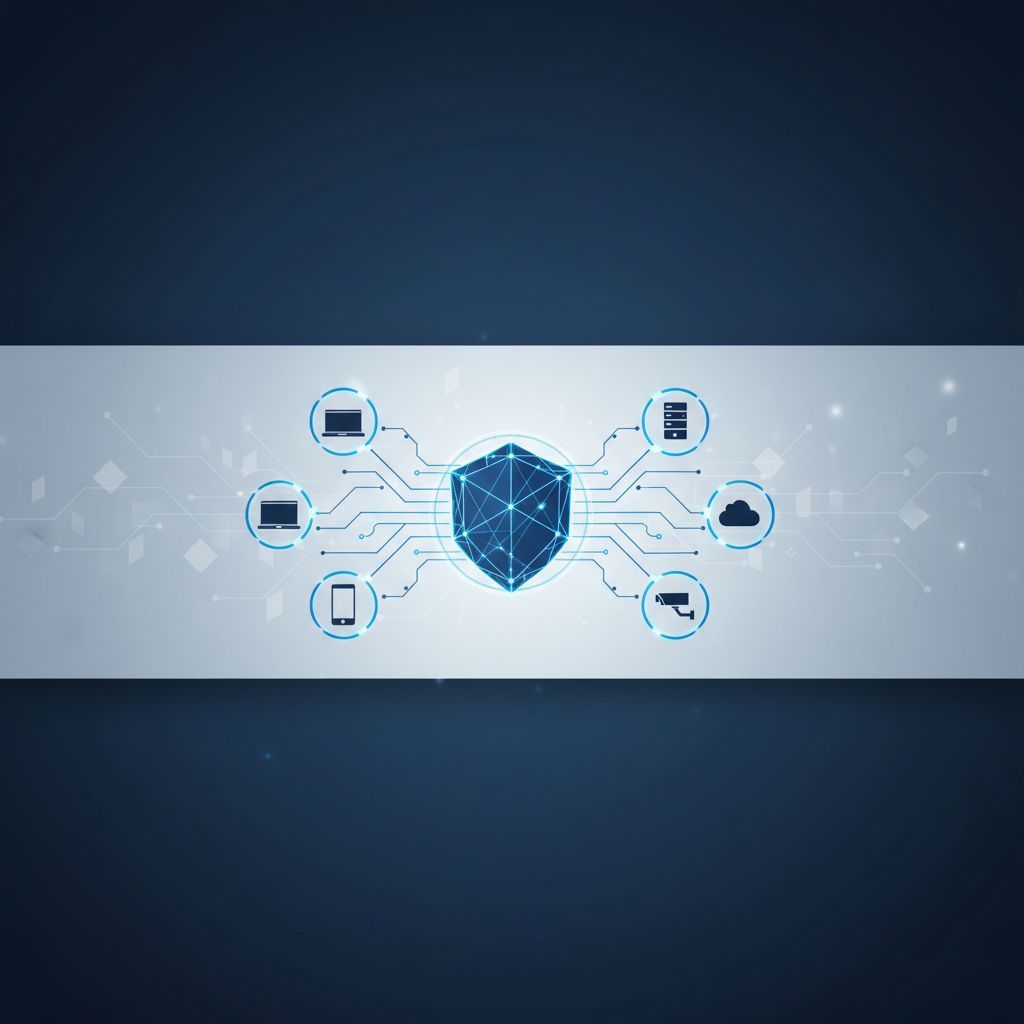
Every laptop, phone, tablet, and desktop connected to your business is a door. Some of those doors are locked. Many are not. Endpoint security for SMBs is the practice of locking every one of them - and making sure you know if someone tries to force one open.
This guide breaks down what endpoint security actually means, why small and mid-sized businesses are prime targets, and what you should have in place to protect your operations.
What Is Endpoint Security?
An “endpoint” is any device that connects to your business network. That includes:
- Desktop computers and laptops
- Smartphones and tablets
- Point-of-sale systems
- Remote employee workstations
- Printers and shared devices
Endpoint security is the set of tools and processes used to monitor, protect, and control those devices. The goal is simple: prevent attackers from using a device as an entry point into your business systems, data, or finances.
It goes beyond antivirus software. Modern endpoint security includes threat detection, response capabilities, device management, and behavioral monitoring. It watches not just for known viruses, but for suspicious activity that might signal something is wrong - even before a threat is fully identified.
Why Endpoint Security Matters More for SMBs Than You Think
There is a common assumption that hackers go after large corporations. The reality is different. Small and mid-sized businesses account for more than 40% of all cyberattacks in the United States. Attackers target SMBs precisely because they tend to have weaker defenses, less IT oversight, and valuable data worth stealing.
Here is what makes SMBs especially vulnerable:
More devices, less visibility. As businesses grow and employees work remotely, the number of devices connecting to company systems multiplies. Most SMBs do not have a clear picture of every device accessing their network at any given time.
No dedicated security team. Large enterprises have security operations centers and full-time analysts. SMBs typically rely on a part-time IT person or an outsourced provider who may not be monitoring endpoints around the clock.
High-value targets. Your business handles financial data, customer records, vendor relationships, and employee information. That data has real value to cybercriminals who sell it or use it for fraud and extortion.
Ransomware is built for this. Ransomware attacks typically start on a single device - usually through a phishing email or an unpatched vulnerability. From there, the attack spreads across the network. Without endpoint protection in place, one employee clicking the wrong link can shut down your entire operation.
A single ransomware incident costs the average small business between $120,000 and $1.2 million when you factor in downtime, recovery, lost revenue, and reputational damage. That is not a risk most businesses can absorb.
What Does Endpoint Security Actually Include?
The term “endpoint security” covers a broad range of tools and capabilities. Here is what a solid setup looks like for an SMB:
Endpoint Detection and Response (EDR)
EDR tools monitor every device in real time. They look for unusual behavior - a process running that should not be, files being encrypted rapidly, network connections to unknown servers - and they alert your team or automatically block the threat. This is a major step up from traditional antivirus, which only catches threats it already knows about.
Antivirus and Anti-Malware
Basic, but still necessary. Modern antivirus tools have evolved significantly and now use machine learning to catch new threats. Every device in your business should have an active, up-to-date antivirus solution. This is the floor, not the ceiling.
Mobile Device Management (MDM)
If your employees use smartphones or tablets for work - or if they access company email on personal devices - you need mobile device management. MDM lets you enforce security policies, remotely wipe a lost or stolen device, and prevent unauthorized apps from accessing business data.
Patch Management
Outdated software is one of the most common ways attackers get in. Patch management automates the process of keeping operating systems and applications updated across every device in your business. If a vulnerability is discovered in Windows, Google Chrome, or any other software your team uses, a patch management system makes sure the fix is applied quickly - not weeks later when someone gets around to it.
Endpoint Encryption
If a laptop is stolen, encryption means the data on it is unreadable without the correct credentials. For businesses handling sensitive client data, financial records, or protected health information, encryption is not optional. It is a baseline requirement.
Zero Trust Access Controls
Zero trust is a security model that assumes no device or user should be trusted by default - even if they are inside your network. Every access request is verified. This limits the damage an attacker can do if they do manage to compromise one device, because they cannot freely move through your systems.
The Real Cost of Ignoring Endpoint Security
It is easy to put endpoint security on the back burner when things are running smoothly. It feels like an expense without an obvious return. That thinking changes the moment something goes wrong.
Consider a few real-world scenarios that play out for SMBs every year:
- An employee opens a phishing email on their work laptop. Ransomware deploys and encrypts every file on the network. The business is offline for a week.
- A salesperson’s smartphone is lost at an airport. It had unencrypted access to the company CRM with thousands of customer records. The business faces a data breach notification obligation and potential regulatory fines.
- A remote worker uses a personal laptop to access company systems. That laptop had not been updated in months and was already infected. The attacker uses it as a bridge into the business network.
None of these scenarios require sophisticated hacking. They require one unprotected device and one moment of opportunity.
For businesses in regulated industries - healthcare, finance, legal, insurance - the stakes are even higher. A breach can trigger compliance violations, audits, and penalties on top of the direct operational damage. If your business has compliance obligations, your endpoint security posture directly affects your regulatory standing. Working with a provider that understands both sides of that equation is critical. Compliance-aware managed cybersecurity connects your security controls directly to your compliance requirements.
How to Approach Endpoint Security as an SMB
Start With a Device Inventory
You cannot protect what you cannot see. The first step is knowing every device that connects to your business - company-owned and personal. This includes devices used by remote employees, contractors, and vendors who have access to your systems.
Choose the Right Protection Level for Your Risk
Not every business needs the same level of endpoint protection. A five-person accounting firm has different risk exposure than a fifty-person logistics company. Your endpoint security investment should match the sensitivity of your data, the size of your team, and the regulatory environment you operate in.
If you are unsure where to start, a structured IT strategy consulting engagement can help you map your current risks and build a prioritized security roadmap.
Do Not Rely on Built-In Protection Alone
Windows Defender and built-in macOS security features are better than nothing. They are not enough on their own for a business environment. They lack centralized management, real-time alerting, and the response capabilities that a business needs when something goes wrong.
Train Your Team
Endpoint security tools only work if the people using those devices understand the basics. Employees should know how to spot phishing emails, why they should not connect to public Wi-Fi without a VPN, and what to do if they suspect their device has been compromised. Technology and training work together.
Work With a Managed Security Provider
Most SMBs do not have the in-house capacity to monitor endpoints 24/7, respond to alerts in real time, and keep up with an evolving threat landscape. A managed security provider does this on your behalf. They deploy the right tools, monitor your environment, and respond to threats before they become incidents. This is one of the most cost-effective ways for a small business to get enterprise-grade protection without the enterprise-grade headcount.
If you are evaluating your overall security posture, exploring your cybersecurity services options is a smart starting point. A good provider will assess your current setup and tell you plainly where the gaps are.
For businesses that want ongoing coverage without building an internal team, managed IT services that bundle endpoint protection with broader IT management can simplify both the technology and the budget.
Endpoint Security SMB: What to Prioritize Right Now
If you are reading this and your business does not have a formal endpoint security program, here is where to focus first:
- Get a device inventory done. Know what is connecting to your network.
- Deploy EDR on every company-owned device. Do not rely on antivirus alone.
- Enable MDM for any mobile device with business access. This includes personal phones used for work email.
- Turn on disk encryption on all laptops and portable devices.
- Set up automated patch management. Stop letting outdated software sit on your network.
- Brief your team on phishing awareness. One informed employee can stop an attack before it starts.
None of these steps require a large IT department. They do require a clear decision to treat endpoint security as a business priority rather than an afterthought.
Ready to Take the Next Step?
Miami Cyber works with SMBs across the United States to build endpoint security programs that are practical, scalable, and matched to the real risks your business faces. Whether you need a full managed cybersecurity solution or a starting-point assessment, our team can help you get protected without overcomplicating it. Reach out to start a conversation about where your business stands today.