
Your competitors are showing up on Google. You are not. That gap is not an accident - it is the result of a deliberate, consistent investment in SEO for small business. The question is not whether you need it. The question is how you get it done.
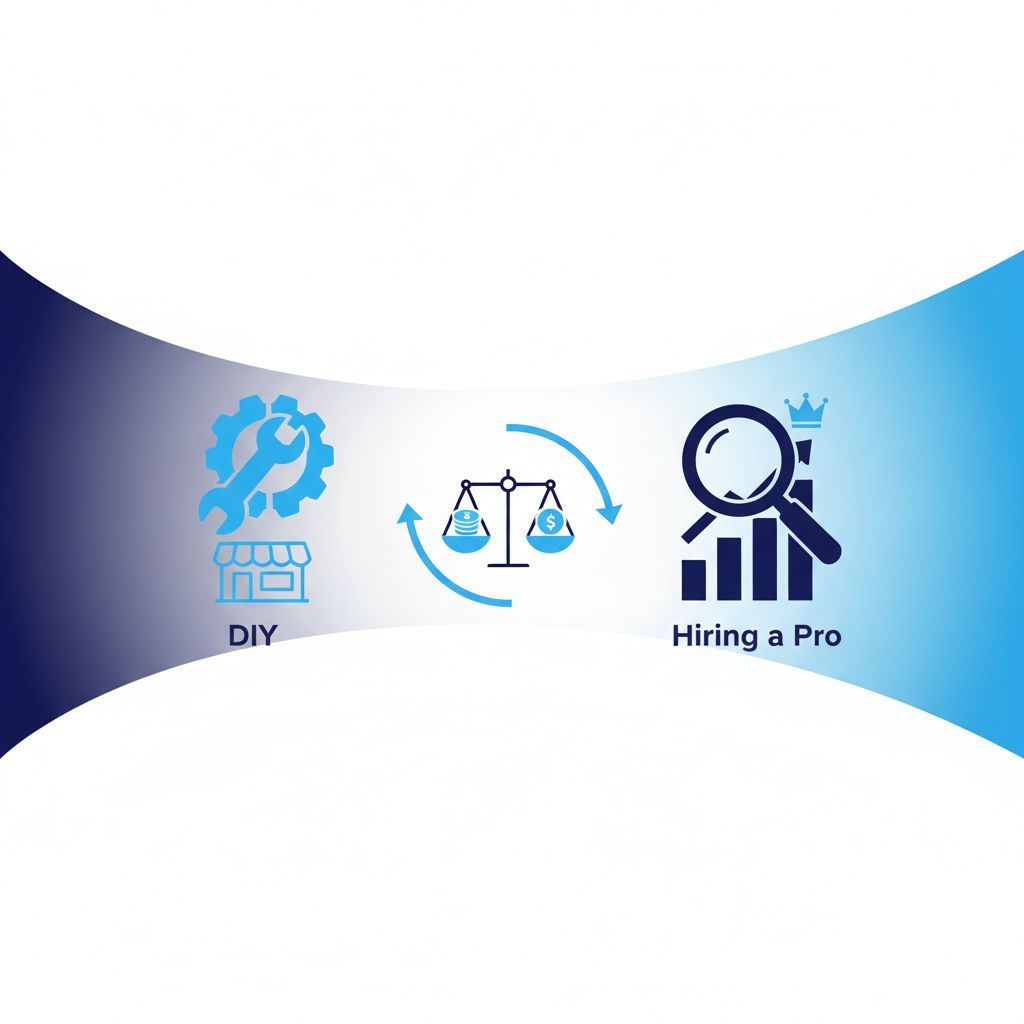
There are two paths: handle it yourself or bring in someone who does it full time. Both can work. Both have real costs. And depending on where your business is right now, one is clearly better than the other.
This breakdown gives you the full picture so you can make the right call.
What SEO Actually Does for a Small Business
Before comparing approaches, let us be clear on what is at stake.
SEO - search engine optimization - is the process of making your website visible when potential customers search for what you sell. When it works, you get a steady stream of people who already want what you offer, landing on your site without you paying for every click.
For a small business, that matters enormously. Paid ads stop the moment you stop paying. SEO keeps delivering. A well-optimized page can bring in leads for months or years with no additional spend.
But SEO is not a switch you flip. It is a system you build. And how you build it - yourself or with professional help - shapes how fast it works and how much it costs you in the long run.
Option 1: DIY SEO
What It Involves
Doing SEO yourself means handling keyword research, writing and optimizing website content, managing your Google Business Profile, building local citations, earning backlinks, and tracking your rankings over time. Tools like Google Search Console, Ahrefs, and Semrush can guide you, but you still have to do the work.
The Real Pros
Low out-of-pocket cost. Free tools exist. Paid tools run $100 to $200 per month. If budget is the primary constraint right now, DIY is accessible.
Deep knowledge of your business. Nobody understands your customers, your services, and your differentiators better than you do. That context is genuinely valuable when writing content.
Full control. You decide what gets published, when, and how. There is no waiting on an agency to prioritize your account.
The Real Cons
Time is not free. SEO done properly requires 10 to 20 hours per month at minimum. For a business owner already stretched thin, that time has a real cost - often a higher one than outsourcing would.
The learning curve is steep. Keyword strategy, technical SEO, on-page optimization, link building - each is a discipline on its own. Getting them wrong does not just waste time. It can actively hurt your rankings.
Results take longer. Professionals with established processes and tools can compress the timeline significantly. A DIY approach, especially early on, often means slower results from trial and error.
You do not know what you do not know. Most business owners who try DIY SEO focus on the visible stuff - writing blog posts, updating meta titles - and miss the technical issues quietly dragging their rankings down.
Best Fit For
DIY SEO makes sense if your business is brand new, budget is extremely limited, you are in a low-competition market, or you genuinely enjoy learning digital marketing. It also works as a supplement - you handle content creation while a pro handles the strategy and technical side.
Option 2: Hiring a Professional
What It Involves
Hiring a professional means engaging a freelancer, an agency, or a full-service digital marketing team to handle your SEO strategy, execution, and reporting. Scope varies widely, from a focused local SEO campaign to a comprehensive content and authority-building program.
The Real Pros
Faster results. Professionals know what works. They have done it before, across dozens of clients, and they have refined their process. That experience compresses the timeline from months to weeks in many cases.
Technical coverage. A good SEO partner handles the stuff you cannot see - page speed, crawl issues, schema markup, mobile usability - that has an outsized impact on rankings.
Consistent execution. One of the biggest killers of SEO results is inconsistency. A professional partner keeps the work moving even when your plate is full.
Measurable ROI. A quality SEO provider does not just report on rankings. They connect the work to traffic, leads, and revenue so you can see exactly what you are getting.
Strategic integration. The best outcomes happen when SEO is connected to your broader digital presence. A team that understands digital marketing as a whole - not just search rankings in isolation - will build a strategy that compounds over time.
The Real Cons
Higher upfront cost. Professional SEO services for small businesses typically run $750 to $3,000 per month depending on scope and market competitiveness. That is a meaningful investment.
Quality varies enormously. The SEO industry has no shortage of providers who promise top rankings and deliver nothing. Vetting matters. Ask for case studies. Ask for a clear deliverables list. Be skeptical of guarantees.
Less hands-on control. You are trusting someone else with a critical part of your business presence. A good partner communicates clearly and involves you in strategy. A bad one goes quiet and sends a monthly report you cannot interpret.
Best Fit For
Hiring a professional makes sense when you are in a competitive market, you want results within a defined timeframe, your website needs technical work, or you are ready to treat SEO as a growth investment rather than a cost to minimize.
SEO for Small Business: Side-by-Side Comparison
| Factor | DIY SEO | Professional SEO |
|---|---|---|
| Monthly cost | $0 to $200 (tools) | $750 to $3,000+ |
| Time required | 10 to 20 hrs/month | Minimal from you |
| Speed to results | 6 to 18 months | 3 to 9 months |
| Technical SEO coverage | Limited | Comprehensive |
| Content quality | Variable | Consistent |
| Strategy depth | Basic | Advanced |
| Best for | Startups, low competition | Growth-focused SMBs |
What About SEO Tools and AI?
A third option is emerging: AI-powered SEO tools that automate keyword research, content suggestions, and on-page optimization recommendations. Tools like Surfer SEO, Clearscope, and AI writing assistants can meaningfully reduce the workload of DIY SEO.
These tools are legitimate and worth using. But they do not replace strategy. They help you execute faster once you know what you are trying to accomplish. If you are already working with an AI consulting partner to modernize your business operations, ask whether AI-assisted content workflows make sense for your marketing as well.
The bottom line on AI tools: they lower the floor for DIY SEO, but they do not close the gap with professional execution entirely. You still need to understand your audience, your competitive landscape, and your content strategy to use them effectively.
The Hidden Cost Most Small Businesses Overlook
Here is what the DIY vs. professional debate often misses: the cost of doing nothing.
Every month you are not ranking, a competitor is. Every search that returns your competitor’s website instead of yours is a customer you did not get. That compound cost is invisible, which is why it is so easy to ignore.
SEO for small business is not a discretionary item if you are serious about growth. It is infrastructure. The question is whether you build it yourself or bring in the people who build it for a living.
There is also the technology dimension to consider. If your website is slow, your hosting is unreliable, or your development environment is outdated, no SEO strategy will perform at full potential. Your IT strategy and your digital marketing strategy need to be aligned. A strong SEO foundation requires a technically sound website underneath it.
How to Decide: Three Questions to Ask Yourself
1. How competitive is my market? If you are a plumber in a major metro area or a law firm competing for high-value keywords, DIY SEO will not be enough. You need professional-grade strategy and consistent execution to move the needle.
2. How much is a new customer worth to me? If a single new client is worth $5,000 or more, the math on professional SEO is straightforward. Even a conservative improvement in organic traffic can pay for itself many times over.
3. Do I have the time and desire to learn this? Be honest. If the answer is no - if you would rather be running your business than studying search engine algorithms - that tells you what you need to know. Hiring a professional is not a shortcut. It is the right allocation of your time.
What Good Professional SEO Actually Includes
If you decide to hire, here is what a quality engagement should cover:
- Keyword research tied to buyer intent, not just search volume
- On-page optimization of existing pages and new content
- Technical SEO audit covering speed, crawlability, and mobile performance
- Google Business Profile management for local visibility
- Link building through relevant, authoritative sources
- Content strategy aligned to your sales funnel
- Monthly reporting with clear metrics and plain-language interpretation
- Marketing automation integration so your SEO leads are captured and nurtured automatically
If a provider does not offer most of these, you are getting a partial solution. Ask specifically what is included before signing anything.
Ready to Take the Next Step?
Miami Cyber works with small and mid-sized businesses across the country to build digital marketing strategies that drive real, measurable growth. Whether you need a full SEO and content program or want to understand where your current website is losing ground, our team connects the technical and marketing sides of your business into a single, coherent strategy. Reach out today and let us show you exactly where the opportunity is.